Stronger farmers. Stronger food systems.
A better future.
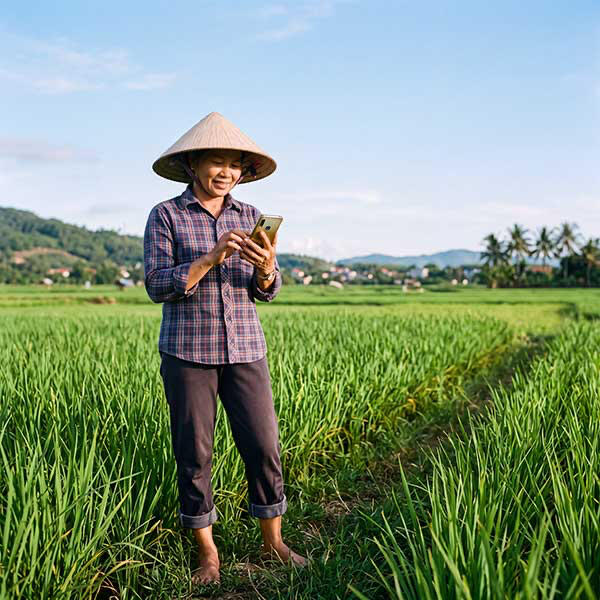
Smallholder farmers are essential to the world’s food supply, rural economies and the health of the land.
Farmer Catalyst helps farmers respond to a changing agricultural world through practical innovation, useful knowledge, stronger partnerships and better access to technology, markets and opportunity.
Agriculture is changing at unprecedented pace
Climate pressure, water scarcity, rising costs, digital technology, changing diets, new markets and political uncertainty are reshaping agriculture.
Smallholder farmers should not simply be expected to adapt.
They should have the tools and opportunities to shape what comes next.
Local Opportunities
Population growth. Urbanisation. Climate change. Digitalisation. Changing diets. Pressure on land and water. Greater demand for resilient food systems.
These forces are transforming agriculture everywhere.
Farmer Catalyst works where those global changes meet the realities of individual farms and communities.
Help spark next
Farmer Catalyst is building a network of farmers, innovators, businesses, researchers, governments, investors and organisations that want to make smallholder agriculture stronger.
If you have knowledge, technology, resources or ideas that can help, we want to work with you.
Click contact (below) and let's start a conversation.
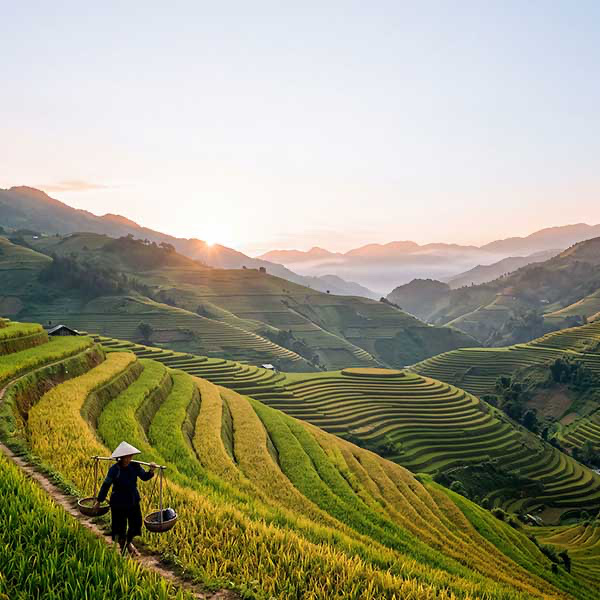
Catalysing better farming, stronger livelihoods and a more resilient planet. An initiative of Biji SOCIAL IMPACT.
Approach
We turn ideas into practical action.
Farmer Catalyst connects farmers with the knowledge, technology, organisations and investment that can make a real difference on the ground.
We support technologies and practices that improve productivity, reduce costs, save water, manage risk and strengthen farm businesses.
Knowledge people can use
We focus on practical skills, trusted information and tools that help farmers make better decisions.
Partnerships that deliver
We bring together farmers, businesses, governments, researchers, investors and development organisations around clear problems and measurable outcomes.
The CCDS Model's Foundations
The Farmer Catalyst approach is premised on five foundational elements. These provide the basis for the CCDS model, which guides everything we do:
Start with trusted local relationships. Work through people and organisations that already understand farmers, local politics, markets and institutions. This reduces the risk of importing solutions that look good on paper but do not fit local realities.
Build around problems, not technologies.
Identify a specific farmer problem first—water, yield, market access, finance, pests, soil health, post-harvest loss—and then assemble the right partners and tools around it.
Create small, high-quality coalitions. Bring together only the partners needed to solve the problem: farmer organisations, local government, universities, technology companies, buyers, financial institutions and funders. Avoid large consortia that create activity but little delivery.
Demonstrate, measure and scale.
Start with practical pilots that can show results quickly. Measure farmer benefit, economics and environmental outcomes. Scale what works through existing networks rather than building large permanent delivery structures.
Act as the trusted bridge.
Farmer Catalyst’s role should be to connect groups that often do not naturally work together—farmers with technology providers, researchers with commercial partners, governments with practical field experience, and funders with credible local opportunities.
connect catalyse demonstrate & scale
1. Connect
Use your regional networks to identify the right people, opportunities and problems. The emphasis should be on trusted relationships and local knowledge rather than open calls for projects.
2. Catalyse
Bring together the smallest effective group of partners and define a clear outcome. Farmer Catalyst can often provide the missing ingredient: convening power, credibility, technical judgement or access to another part of the network.
3. Demonstrate
Test solutions under real farming conditions. Projects should be practical, relatively short and designed from the outset to answer a simple question: does this improve outcomes for farmers?
4. Scale
Farmer Catalyst will not try to become the permanent operator of every successful project. Once something works, scaling should come through businesses, farmer organisations, governments, financial institutions or other established delivery partners.
About
Farmer Catalyst is an independent, multi-stakeholder initiative that brings togther farmers, businesses, researchers, governments, investors and community organisations together to help smallholder farmers build more productive, profitable and resilient farms. Starting in Southeast Asia, the initiative focuses on farmers moving from subsistence towards dependable incomes and stronger farm businesses.
Smallholder farmers are central to the region’s food supply and rural economies, yet many face poor soils, unreliable water, rising costs and changing weather. Limited access to quality inputs, suitable technology, finance, insurance and markets makes it harder to earn a living. These challenges are connected: a new technology must be affordable and work under local conditions, while increased production must find a market.
Working Together around the farmer
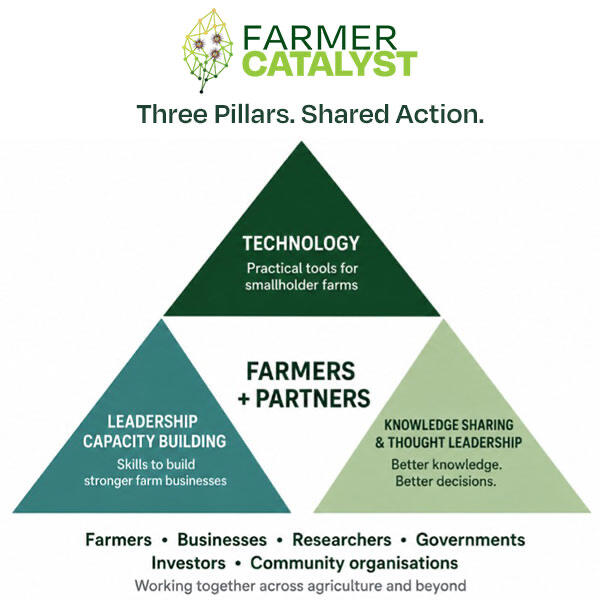
Farmers and partners will identify priorities together, combine their resources and assess what works. Partnerships will extend across agriculture and into energy, water, waste management, finance, environmental services, nutrition, health and satellite technology, bringing together the capabilities needed to address problems that cross sector boundaries.
Three connected pillars will guide this work. Across all three, women and men must have equal opportunities to participate and benefit, and improvements in farm income must support the long-term health of soil, water and the wider environment.
the three pillars
1 Technology
Farmer Catalyst will identify, evaluate and help deliver affordable technologies that improve smallholder farm profitability. The focus will be on tools suited to small plots, local growing conditions and the needs of women and men farmers. Recognised experts will help assess their suitability, while farmers, researchers and technology providers will work together to test and refine them in practice.
Demonstration sites will give farmers and partners a place to see technologies at work and judge their value. These sites will also support leadership training, linking learning to real farming decisions. Partnerships with research institutions, technology developers and agricultural accelerators will connect promising innovations with the needs of farmers in the region.
2 Leadership capacity building
Short, practical professional development courses will help people leading change in agriculture support the transition from subsistence farming to profitable enterprises. Participants will build the knowledge and judgement needed to assess technology, organise partnerships and connect farmers with services and markets. Courses will draw on local farming challenges and experience from demonstration sites, so that learning can be applied in the field.
3 Knowledge sharing and thought leadership
Farmer Catalyst will bring farmers, businesses, researchers and policymakers together to share experience and address specific challenges in smallholder agriculture. Focused workshops and expert discussions will connect local knowledge with regional and international expertise on farming systems, technology and policy. A proposed regional policy conference will provide a further opportunity to bring lessons from the field into decisions that affect farmers.
This work will make useful findings easier to access and apply, helping partners build on successful approaches and learn from those that fall short. Knowledge gained through technology trials and leadership development will feed into these discussions, keeping all three pillars connected.
Putting the partnership to work
Early partners will help define the first priorities, identify suitable demonstration sites and agree how progress will be measured. The starting point will be the needs of farmers in each agricultural system, with clear responsibilities for the organisations involved and a shared view of the results they aim to achieve.
Success will be judged by changes on farms and in farming households: more dependable incomes, better access to markets, stronger management of climate and business risks, and healthier natural resources. By bringing the right people and resources together around these goals, Farmer Catalyst aims to make practical improvements that farmers and partners can sustain and extend.
Contact
Farmer Catalyst is building a network of farmers, innovators, businesses, researchers, governments, investors and organisations that want to make smallholder agriculture stronger.
If you have knowledge, technology, resources or ideas that can help, we want to work with you.
Thank you
Thank you for contacting Farmer Catalyst. We will get back to you shortly.